
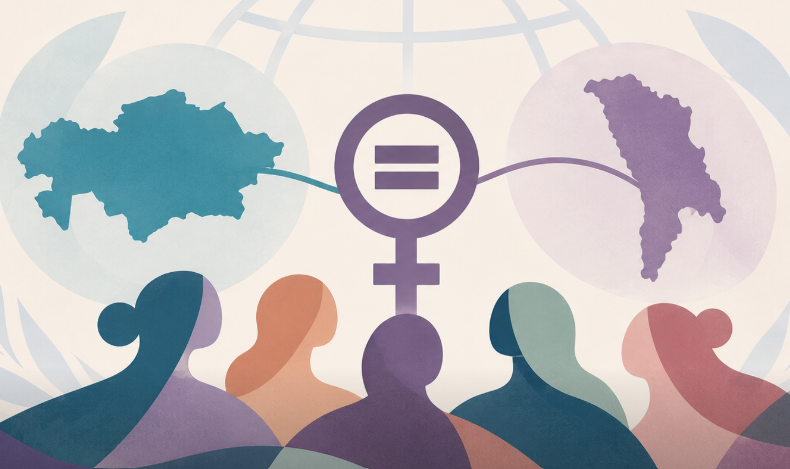
In 2026, national and regional organizations (including EWNA and SWAN) submitted Kazakhstan and Moldova alternative reports to the UN Committee on the Elimination of Discrimination against Women (CEDAW).
It is ahead of CEDAW 93rd session, focusing on the implementation of the Convention. Both reports examine the situation of women living with HIV, women who use drugs and sex workers, documenting how punitive laws, stigma and discriminatory institutional practices continue to undermine their rights despite broader progress in gender equality legislation.
Based on community-led monitoring, focus groups and documented cases, the reports highlight the intersection of gender-based violence, HIV and drug policy, discrimination in healthcare, and barriers to protection and justice.
Key highlights: Kazakhstan – full submission text
The Kazakhstan report identifies continuing gaps between the country’s CEDAW commitments and the lived experiences of women from key populations.
- Punitive laws and law enforcement practices: HIV exposure and transmission remain criminalised, while drug laws and administrative provisions affecting sex workers increase vulnerability to harassment, extortion and arbitrary detention.
- Healthcare discrimination: Women report breaches of confidentiality, degrading treatment and reproductive coercion, including pressure towards sterilisation or pregnancy termination.
- Barriers to protection and justice: Discriminatory shelter admission criteria and stigma can leave survivors of gender-based violence without protection, while rural women face additional barriers to forensic examinations and legal assistance.
- Harm reduction gaps: Naloxone has been unavailable since 2018, and continuity of opioid agonist therapy is not guaranteed during hospitalisation.
- Restrictions on civic space limit opportunities for women’s rights organisations and marginalised communities to advocate publicly.
Key highlights: Moldova – full submission text
The Moldova report examines the situation of women from key populations on both banks of the Dniester River.
- HIV criminalisation: HIV exposure and transmission remain criminalised under Article 212, although a draft law proposes repealing the HIV-specific provisions.
- Healthcare and reproductive rights: Women report breaches of confidentiality, discriminatory treatment, coerced HIV testing and pressure to terminate pregnancies.
- Barriers to GBV protection: Shelter rules can exclude women because of infectious diseases, substance use or mental health conditions, while mandatory testing and other requirements create further obstacles.
- Access to justice: Stigma, fear of disclosure and mistrust of law enforcement discourage women from reporting violence and seeking legal remedies.
- The Transnistrian region presents additional concerns, including punitive drug and HIV-related policies, restrictions on civil society and risks to uninterrupted HIV treatment, harm reduction and sexual and reproductive healthcare.