At the 61st regular session of the Human Rights Council, an important intervention highlighted the urgent need to protect civil society organisations delivering public health services in Belarus from ongoing repression.
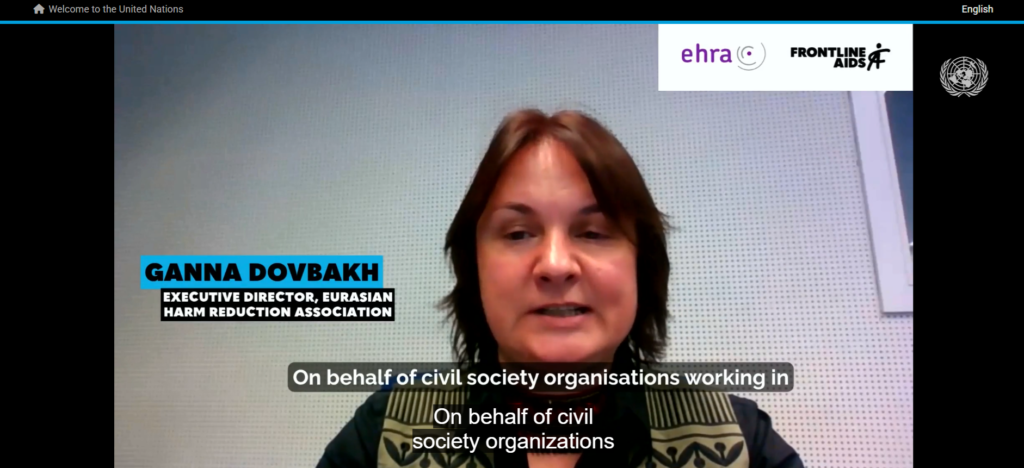
During the session under Item 4: Interactive dialogue with the Group of Independent Experts on Belarus, the Council discussed the latest findings on the human rights situation in the country.
Key findings of the UN expert report
The discussion was grounded in the report of the Group of Independent Experts on the Situation of Human Rights in Belarus, submitted pursuant to resolution 58/19.
The report consolidates evidence of widespread human rights violations and crimes against humanity committed by Belarusian authorities since May 2020. It documents patterns of repression targeting dissent both domestically and abroad, including:
- Arbitrary arrests and detention of individuals for actual or perceived opposition
- Inhuman conditions of detention, ill-treatment, and torture
- Transnational repression of Belarusians in exile
- A pervasive culture of impunity.
The report concludes with recommendations to both Belarus and the international community to ensure the protection and fulfilment of fundamental human rights. For more information please refer to:
- Full expert report: English | Russian.
- Summary of the report.
- Information on the Group of Experts.
Diverging positions from states
A number of countries, including Norway and a group of states, the European Union, Croatia, Ukraine, the United Kingdom, France, Germany, Armenia, and Ireland, expressed deep concern about ongoing torture, repression, and systemic human rights violations.
They highlighted the persecution of journalists, human rights defenders, and opposition leaders, condemned the use of violence against detainees, and called for the immediate and unconditional release of political prisoners, as well as respect for freedom of association and civil society.
In contrast, several states—including Venezuela, Iran, Eritrea, Kyrgyzstan, Russia, Uzbekistan, Cuba, Zimbabwe, China, and Kazakhstan—supported the Belarusian government’s position, pointing to alleged progress in human rights and socio-economic development. These statements emphasised non-interference in internal affairs and criticised what they described as the politicisation of the situation. For example, the Russian delegation referred to “deliberate hysteria around prisoners who committed extremist crimes” (01:55:00) and claimed that “people in Belarus are happy with resolving the situation.”
Civil society intervention: shrinking civic space and public health risks
The intervention on behalf of civil society organisations was delivered by Ganna Dovbakh, Executive Director of EHRA, and coordinated with Frontline AIDS and the Alliance for Public Health.
It underscored the direct link between shrinking civic space and the deterioration of public health and human rights protections—particularly for marginalised communities. The intervention was based on the results of the recently published report Shrinking civic space and marginalised communities in Eastern Europe and Central Asia.
Full text of the intervention:
“I deliver this statement on behalf of civil society organizations working across Eastern Europe and Central Asia on human rights and public health, and our colleagues and partners in Belarus.
We thank the Group of Experts for their continued attention to the human rights situation in Belarus. Recent analyses confirm that civic space in the country remains severely restricted, with devastating consequences for civil society and marginalized communities.
Since 2020, hundreds of civil society organizations have been forcibly liquidated or compelled to self-dissolve. At the same time, restrictive legislation and administrative barriers have made it nearly impossible to register new organizations or safely operate within the country. Organizations working with marginalized groups—including LGBTQI+ communities and key populations affected by HIV—face particularly high levels of scrutiny, stigma, and legal risk.
We are deeply concerned by the continued use of broadly defined “extremism” provisions and other criminal laws to target activists, community leaders, and independent organizations. These measures silence dissent and undermine essential community-led health and social services.
Shrinking civic space directly weakens human rights protection, public health responses, and the ability of communities to participate in decision-making.
We therefore call on the authorities of Belarus to:
First, immediately cease the liquidation and criminalization of civil society organizations and human rights defenders.
Second, repeal or amend legislation restricting freedom of association, peaceful assembly, freedom of expression and access to information, and access to funding.
Third, ensure safe and enabling conditions for community-led organizations, particularly those working with marginalized and criminalized populations.
Finally, we urge the international community to continue supporting Belarusian civil society, including organizations operating in exile, and to maintain strong monitoring of the human rights situation.”
Watch the session – full recording
Relevant timestamps:
- Independent Expert Report – 00:53:00
- State party response – 01:03:00
- Civil society intervention (Frontline AIDS / Alliance for Public Health / EHRA) – 02:22:15