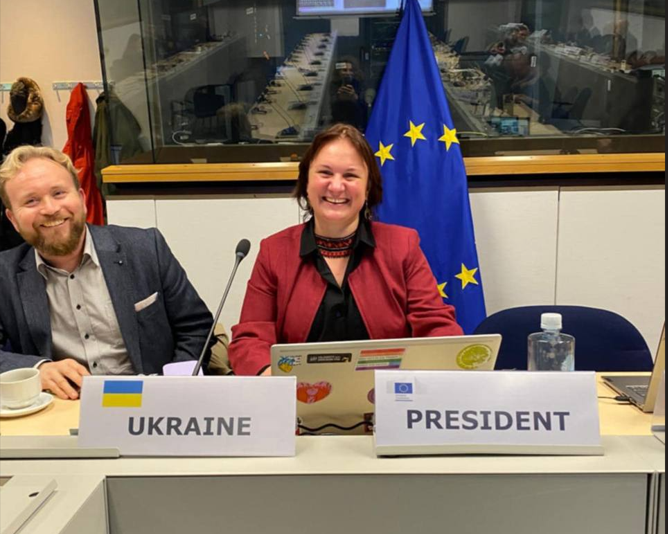
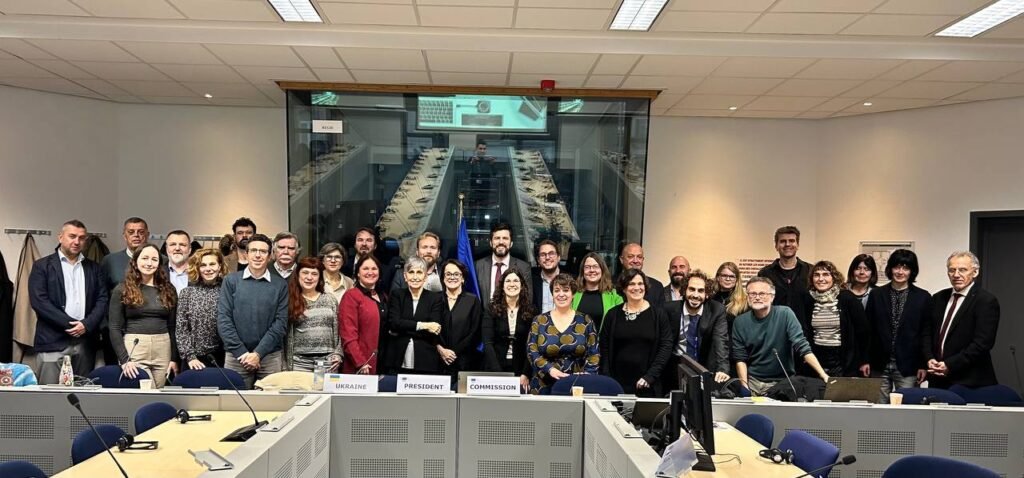
EU Civil Society Forum on Drugs (CSFD) held its annual plenary meeting on 8–9 December 2025 in Brussels, bringing together civil society organisations from all around Europe, EU institutions, agencies for two days of strategic discussion.
The meeting was chaired by the Executive Director of the Eurasian Harm Reduction Association (EHRA) Ganna Dovbakh, who currently serves as Chair of the CSFD, underscoring EHRA’s broader engagement in shaping health-, harm reduction-, and human-rights-based approaches to drug policy across Europe.
A recurrent and cross-cutting concern throughout the meeting was the Shrinking civic space and barriers to meaningful participation for civil society across Europe and beyond, and its direct impact on meaningful engagement in decision-making processes.
There were two sessions during the meeting were the topic of the shrinking civic space was addressed:
1. Session with DG JUST and DG HOME where the EU Civil Society strategy and ways how civil society in drug policy could get support.
DG JUST presented the EU Civil Society Strategy, outlining planned actions to support an enabling environment for civil society, strengthen participation mechanisms, and improve coherence across policy areas:
- CSFD members welcomed the initiative while raising concerns about shrinking civic space in several EU Member States and neighbouring countries.
- The discussion underscored the importance of ensuring that commitments to civic participation are translated into concrete safeguards and resources, particularly in policy areas that intersect with law enforcement and security.
2. Session with participation from more than 10 member states (including Croatia, Czech Republic, Cyprus, Denmark, Finland, France, Germany, Ireland, Lithuania, Romania, Spain, The Netherlands) facilitated by Danish Presidency and participation from Cyprus delegation (next EU Presidency).
EHRA, EHRA members and CSFD members shared key challenges in shrinking civic space:
- EHRA Executive Director raised issues of the shrinking civic space in EECA region including Georgia, Kazakhstan, Kyrgyzstan.
- CSFD members highlighted persistent challenges in both EU and national contexts, including limited access to policy discussions, uneven consultation practices, and a lack of transparency regarding how civil society input is reflected in final decisions.
- These challenges are compounded by significant funding cuts affecting a large proportion of CSFD member organisations, threatening the sustainability of civil society advocacy and community-led monitoring.
- Participants warned that the erosion of civil society capacity risks the disappearance of essential advocacy voices, reduced community participation, lower access to services, and declining service quality, alongside growing gaps in data on the needs and realities of people who use drugs.
- Further exchanges addressed disparities in civil society involvement across Member States, with CSFD calling for minimum standards for engagement to ensure consistent and meaningful participation.
- Discussions also covered upcoming dialogues with third countries and developments in international drug policy, including preparations for the Commission on Narcotic Drugs, where civil society representatives stressed the importance of the EU continuing to champion evidence-based, health-oriented, and human-rights-driven approaches at the global level.