In summer 2026, national and regional organizations (including EHRA, EWNA and SWAN) submitted Kazakhstan and Moldova alternative reports to the UN Committee on the Elimination of Discrimination against Women (CEDAW).
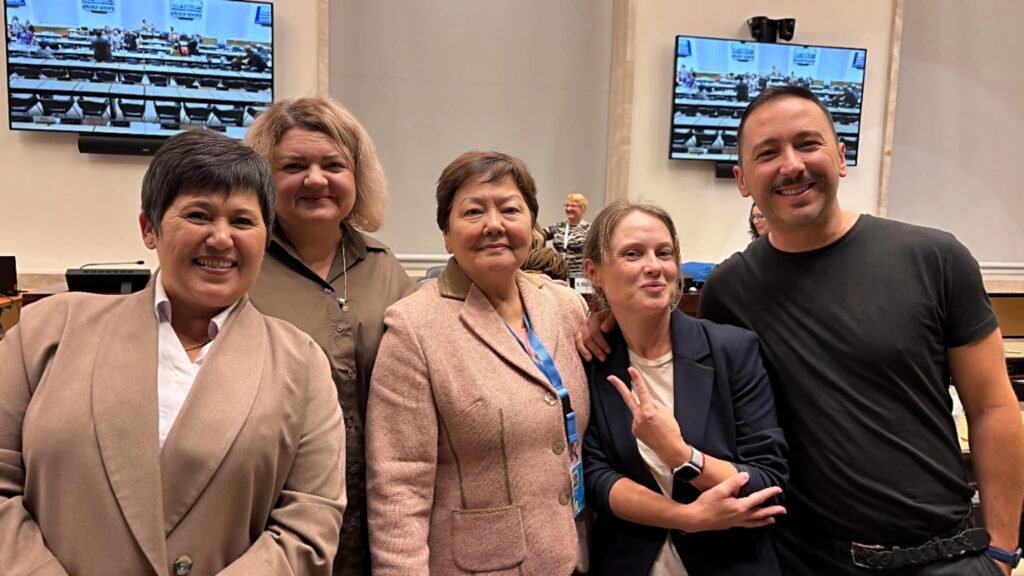
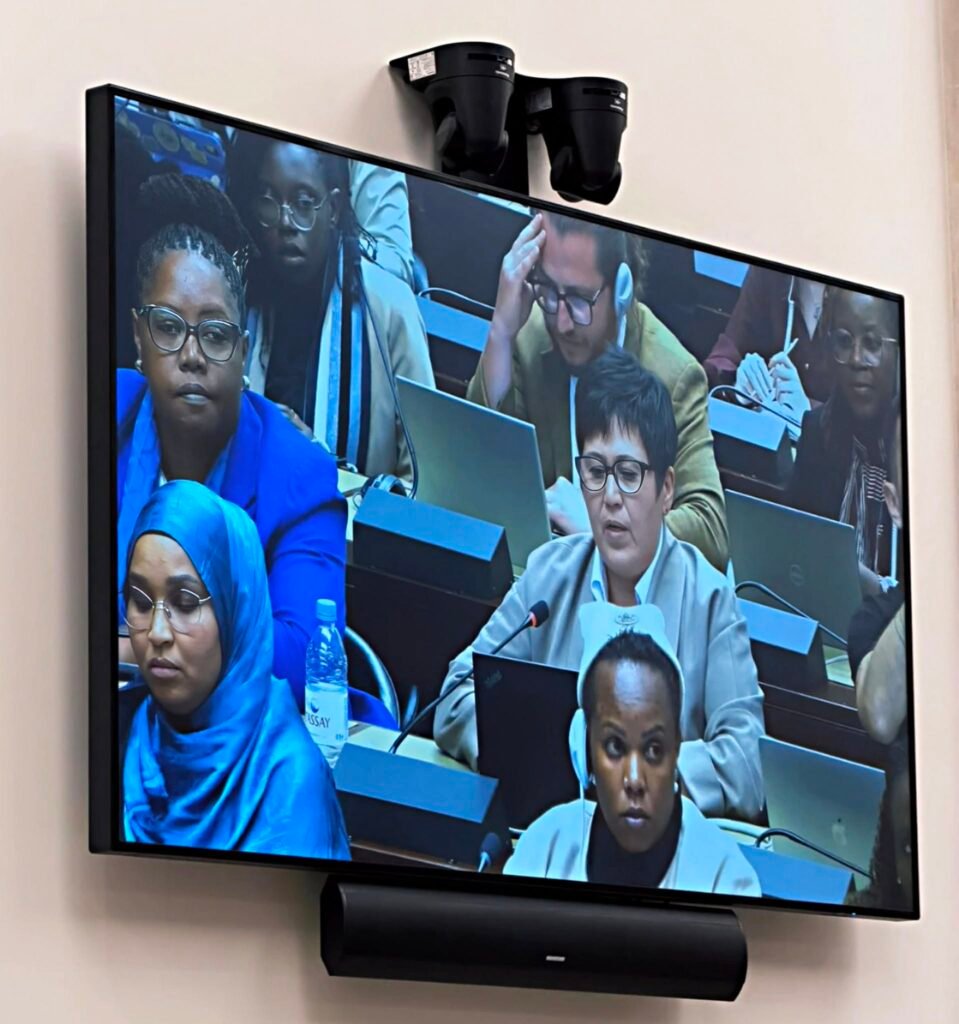
Community representatives, including RESILIENT project* partners (Lyubov Vorontsova, EWNA and Trajche Janushev, SWAN) and EHRA member Oksana Ibragimova, “Overcoming” Kazakhstan – participated in the CEDAW session in Geneva 5-9 October 2026:
- In the concluding observations CEDAW urges Kazakhstan and Moldova to address discrimination, criminalisation and barriers to healthcare for marginalised women. Read in more detail about Kazakhstan and Moldova below.
- The barriers and issues faced by marginalized women were recognized as part of the broader women’s rights agenda. HIV criminalisation, sex workers’ rights and the rights of women who use drugs were addressed not only as public health concerns, but as questions of equality, bodily autonomy, protection from violence and access to justice.
- Direct engagement with individual CEDAW members provided an opportunity to highlight (1) HIV criminalisation, discrimination against women who use drugs and sex workers, reproductive autonomy, and barriers to accessing healthcare and protection services; (2) the need for a clearer understanding of sex work decriminalization and the distinction between consensual adult sex work, trafficking and exploitation; (3) the need for sex workers’ rights to be considered across the Committee’s work on health, violence, justice, economic rights and non-discrimination.
- One of key messages raised with International Women’s Rights Action Watch Asia Pacific (IWRAW Asia Pacific), representatives supporting the Special Rapporteur on the right to health, and individual CEDAW members, is that sustaining regional networks is essential to ensuring that political repression, criminalization and lack of resources do not determine whose experiences reach CEDAW and whose remain unheard. Community-led organizations operate under restrictive political conditions, including foreign agent laws and the criminalization of their communities. Publicly associating their names or organizations with international advocacy can expose them to serious risks. Funding shortages and limited organizational capacity create further barriers. Regional networks provide a crucial anchor: supporting national shadow reporting, connecting community evidence with UN mechanisms, and helping organizations navigate risks around visibility and participation. Without this support, CEDAW risks losing precisely the voices it most needs to hear, including sex workers, people who use drugs, people living with HIV and LGBT communities.
CEDAW recommendations on Kazakhstan
The Committee’s concluding observations on Kazakhstan, issued on 2 November 2026 (CEDAW/C/KAZ/CO/6), included several important findings and recommendations directly addressing the rights of women living with HIV, women who use drugs and sex workers.
Women living with HIV — para 42(d), 42(e) and 43(d)
The Committee expressed concern that stigma and discrimination continue to limit access to sexual and reproductive healthcare and protection from gender-based violence for women living with HIV.
It also identified insufficient training of healthcare professionals on women’s rights and non-discrimination, particularly regarding women living with HIV.
In paragraph 43(d), the Committee recommended that Kazakhstan:
– Strengthen measures to prevent and address stigma and discrimination against women living with HIV in healthcare and services supporting survivors of violence.
– Ensure respect for women’s reproductive autonomy.
– Remove practical restrictions related to HIV status.
– Ensure consistent application of admission rules in relevant services and institutions.
Women living with HIV, women who use drugs and sex workers — para 46(e) and 47(e)
The Committee expressed concern about discrimination, criminalisation and administrative sanctions affecting these groups of women.
In paragraph 47(e), it recommended that Kazakhstan:
– Protect women living with HIV, women who use drugs and sex workers from discrimination, criminalisation and punitive sanctions.
– Guarantee their access to justice and healthcare.
– Provide voluntary exit programmes and alternative income-generating opportunities for women wishing to leave prostitution.
This is an important outcome of our advocacy because the Committee explicitly recognised the harmful impact of criminalisation and punitive measures on all three groups.
However, the Committee did not explicitly recommend repealing Kazakhstan’s specific HIV criminalisation provision or provide separate recommendations on naloxone and opioid agonist therapy.
Women human rights defenders and civil society — para 25(a) and 47(f)
The Committee also recommended that Kazakhstan ensure freedom of expression, peaceful assembly and association for civil society organisations, including feminist organisations and those defending the rights of LBTI women, and protect women human rights defenders from harassment, intimidation and reprisals.
Importantly, paragraph 25(a) was selected for the Committee’s two-year follow-up procedure, requiring Kazakhstan to report on its implementation.
CEDAW recommendations on the Republic of Moldova
The Committee’s concluding observations on Moldova, issued on 2 November 2026 (CEDAW/C/MDA/CO/7), included particularly detailed recommendations addressing HIV criminalisation, sex workers’ rights, discrimination in healthcare and shelters, and the rights of women who use drugs.
HIV criminalisation — para 48(a) and 49(a)
The Committee expressed concern about the continued criminalisation of conduct creating a risk of HIV transmission under Article 212 of the Criminal Code.
In paragraph 49(a), it explicitly recommended that Moldova:
– Review Article 212 of the Criminal Code to decriminalise HIV transmission and exposure.
– Adopt comprehensive measures to eliminate stigma, discrimination and socioeconomic exclusion affecting women living with HIV, women who use drugs and sex workers.
– Provide systematic training to healthcare professionals, law enforcement officers, social workers and staff of shelters and crisis centres.
This is one of the strongest outcomes of our advocacy, as the Committee explicitly called for legal reform on HIV criminalisation.
Confidentiality, coercive testing and discrimination — para 48(b) and 49(b)
The Committee raised concerns about breaches of confidentiality, coercive HIV testing, discriminatory treatment in healthcare and exclusion from shelters and crisis centres.
It recommended prohibiting these practices and ensuring confidential and non-discriminatory healthcare, mental health and psychosocial support, protection, effective complaint mechanisms and remedies.
Women who use drugs — para 48(c) and 49(c)
The Committee expressed concern about the official registration of women who use drugs and the restrictions that can result from it, including barriers to employment, obtaining driving licences and exercising parental rights.
It recommended that Moldova:
– Review the registration system for people who use drugs to protect confidentiality.
– Remove disproportionate restrictions resulting from registration.
– Ensure that drug use alone does not lead to discrimination in employment, driving licences or parental rights.
– Expand adequately funded and geographically accessible harm-reduction services.
Sex workers’ rights and decriminalisation — para 26(c), 27(c), 48(d) and 49(d)
The Committee expressed concern about the criminalisation of women in prostitution under Article 89 of the Contravention Code.
In paragraph 27(c), it explicitly recommended amending Article 89 to decriminalise women in prostitution and ensure that they can report violence and exploitation and access healthcare, legal assistance and protection without fear of punishment.
The Committee also recommended ensuring non-discriminatory access to healthcare for sex workers, including sexual and reproductive health services, mental health services and specialised support for survivors of gender-based violence.
It further called for adequately funded voluntary exit programmes and alternative income opportunities for women wishing to leave sex work.
Women in the Transnistrian region
Although the Committee did not specifically mention the Transnistrian region in its HIV-related recommendations, it addressed the region in other sections.
The Committee recommended improving access to services for survivors of gender-based violence, strengthening protection against trafficking and exploitation, removing barriers to obtaining identity documents and accessing healthcare and social protection, and addressing gaps in data concerning women in the region.
These recommendations provide additional opportunities for advocacy on access to essential services for women on both banks of the Dniester River.
Data collection — para 52(c) and 53(c)
The Committee recognised gaps in data concerning women living with HIV, women who use drugs and women in prostitution.
It recommended addressing these gaps while ensuring confidentiality, data protection and respect for self-identification.
Two-year follow-up
Importantly, the Committee selected two recommendations directly relevant to our advocacy for its two-year follow-up procedure:
– Paragraph 27(c): Decriminalisation of women in prostitution through amendment of Article 89 of the Contravention Code.
– Paragraph 49(a): Review of Article 212 of the Criminal Code to decriminalise HIV transmission and exposure, alongside measures to address discrimination against women from key communities.
Moldova is expected to provide written information on progress in implementing these recommendations within two years.
* The project “RESILIENT Communities & Securing Civic Space for HIV Response in EECA” (RESILIENT) is implemented by EHRA, ECOM, EWNA and SWAN with the support of Elton John AIDS Foundation.