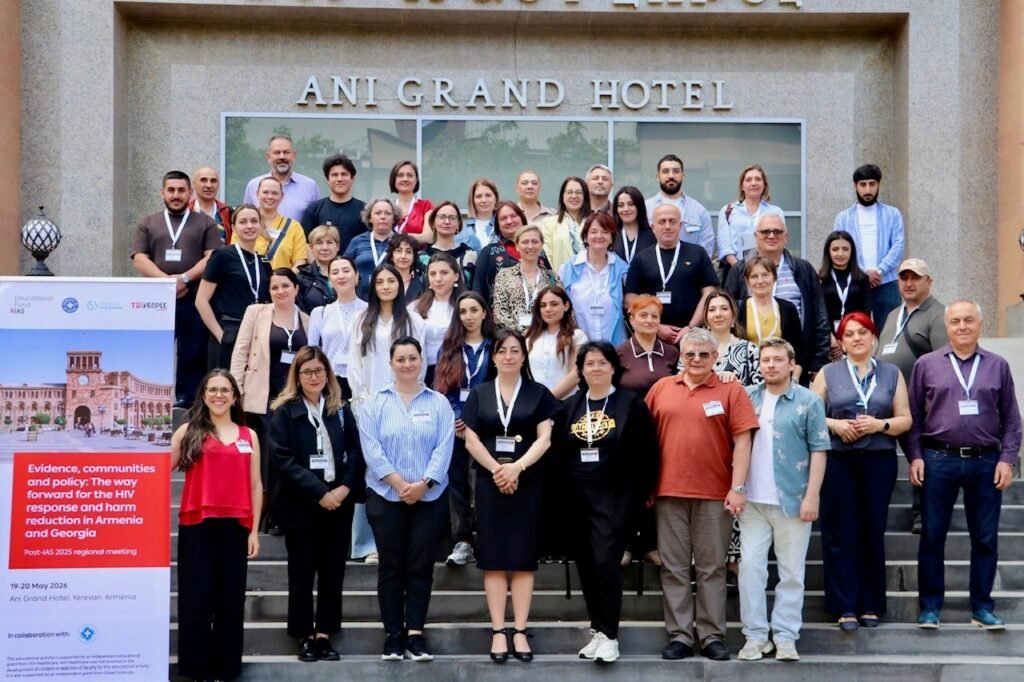
On 19–20 May 2026, representatives of the Rise & Decriminalize Movement, including EHRA, EWNA and ENPUD, participated in the regional meeting “Evidence, Communities and Policy: The Way Forward for the HIV Response and Harm Reduction in Armenia and Georgia” held in Yerevan. The meeting was organised by the International AIDS Society Educational Fund in partnership with Real World Real People and Médecins du Monde.
The meeting brought together regional and national stakeholders, community networks, harm reduction experts, and civil society representatives to discuss the future of HIV responses, harm reduction sustainability, human rights, and civic space in Eastern Europe and Central Asia (EECA), particularly in Armenia and Georgia.
A central focus of the discussions was identifying practical strategies to overcome growing repression against civil society and to ensure continuity of life-saving HIV and harm reduction services for people who use drugs and other key populations during the ongoing donor transition period in the region.
During the session on advancing human rights and reducing HIV-related stigma, Ganna Dovbakh (EHRA) presented regional lessons from EECA on stigma, criminalisation, and shrinking civic space affecting community-led HIV responses.
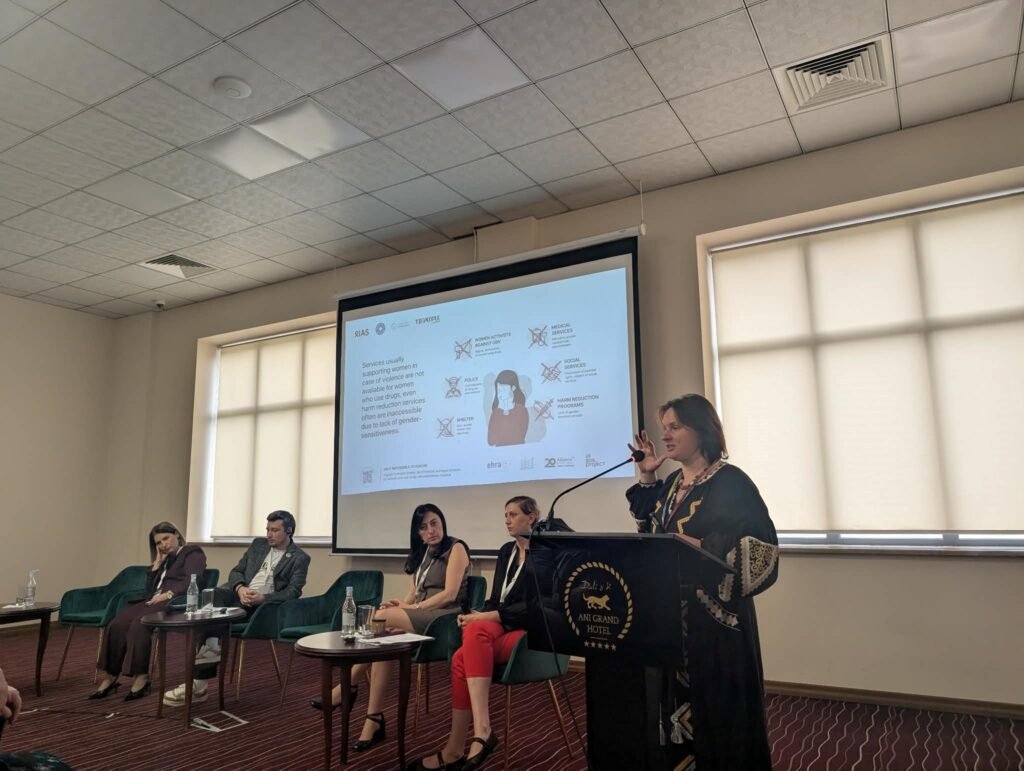
Key messages from the presentation by EHRA:
- Stigma and discrimination remain major structural barriers preventing key populations from accessing HIV prevention, testing, treatment, and care services across EECA.
- Criminalisation of drug use, HIV exposure, and sex work fuels fear, aggressive policing, exclusion from healthcare, and low uptake of harm reduction services.
- Decriminalisation is an essential public health and human rights approach that improves access to HIV services, reduces stigma, and supports community participation in healthcare responses.
- Shrinking civic space across EECA increasingly threatens community-led HIV and TB programmes, particularly for people who use drugs and other marginalised populations.
- Protecting civic space and supporting self-organised community movements are critical for sustaining effective HIV responses and defending human rights in the region.
- Regional solidarity and intersectional community cooperation remain essential to resisting criminalisation and ensuring access to comprehensive care and justice for affected communities.
The meeting concluded with strong calls for continued regional cooperation, protection of community leadership, and expansion of evidence-based, rights-centred harm reduction and HIV policies across EECA.